
Last updated September 10, 2026
Full 25-point door and opener safety check with every visit - springs, cables, rollers, tracks, and your LiftMaster or Chamberlain opener included
You get a price before we start. It does not change when the truck arrives.
 Before
 After
After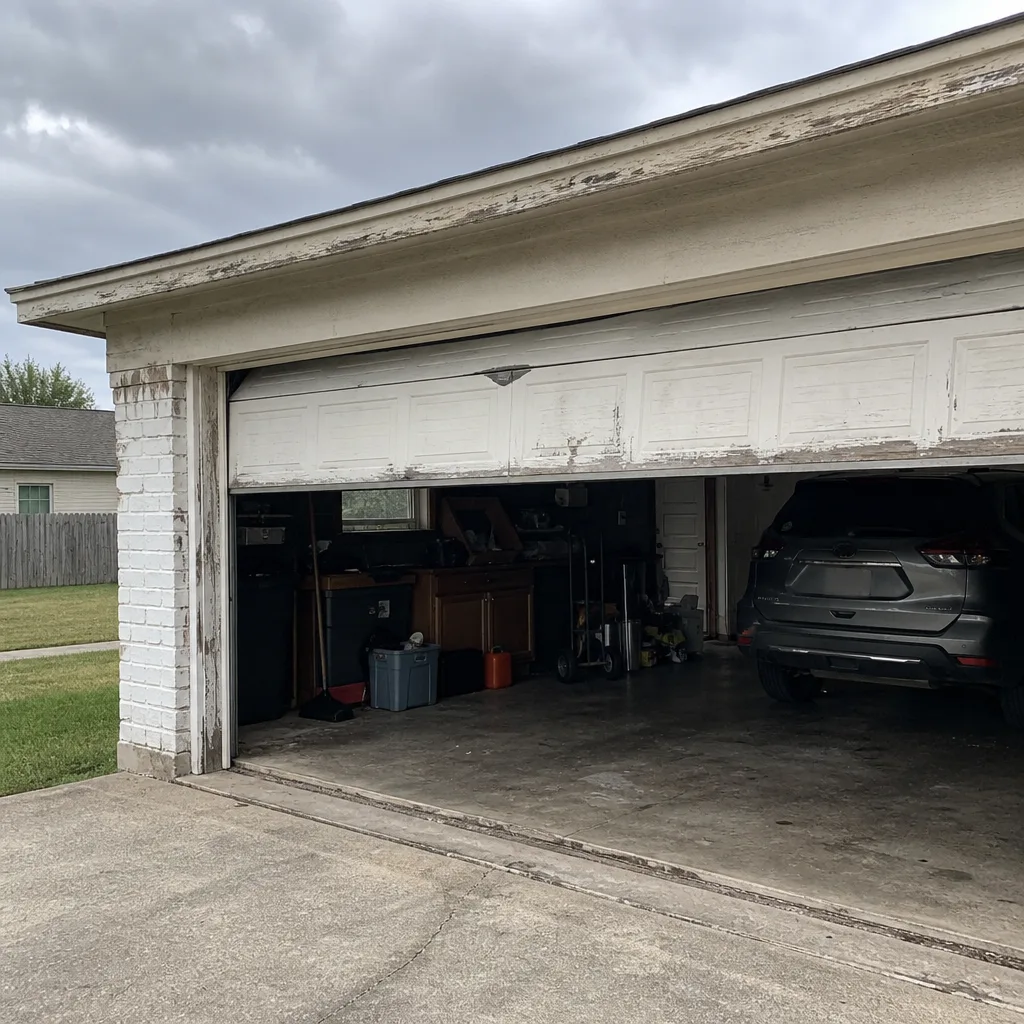 Before
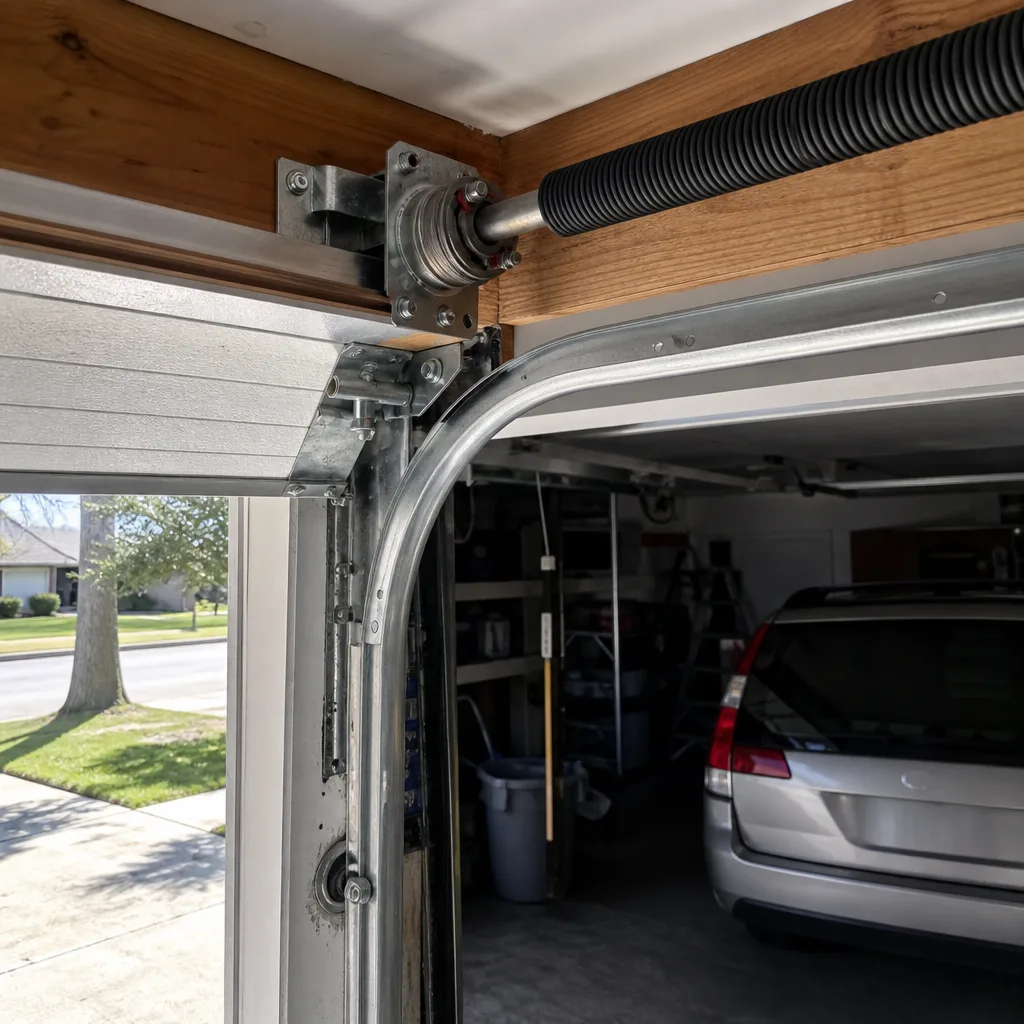 After
After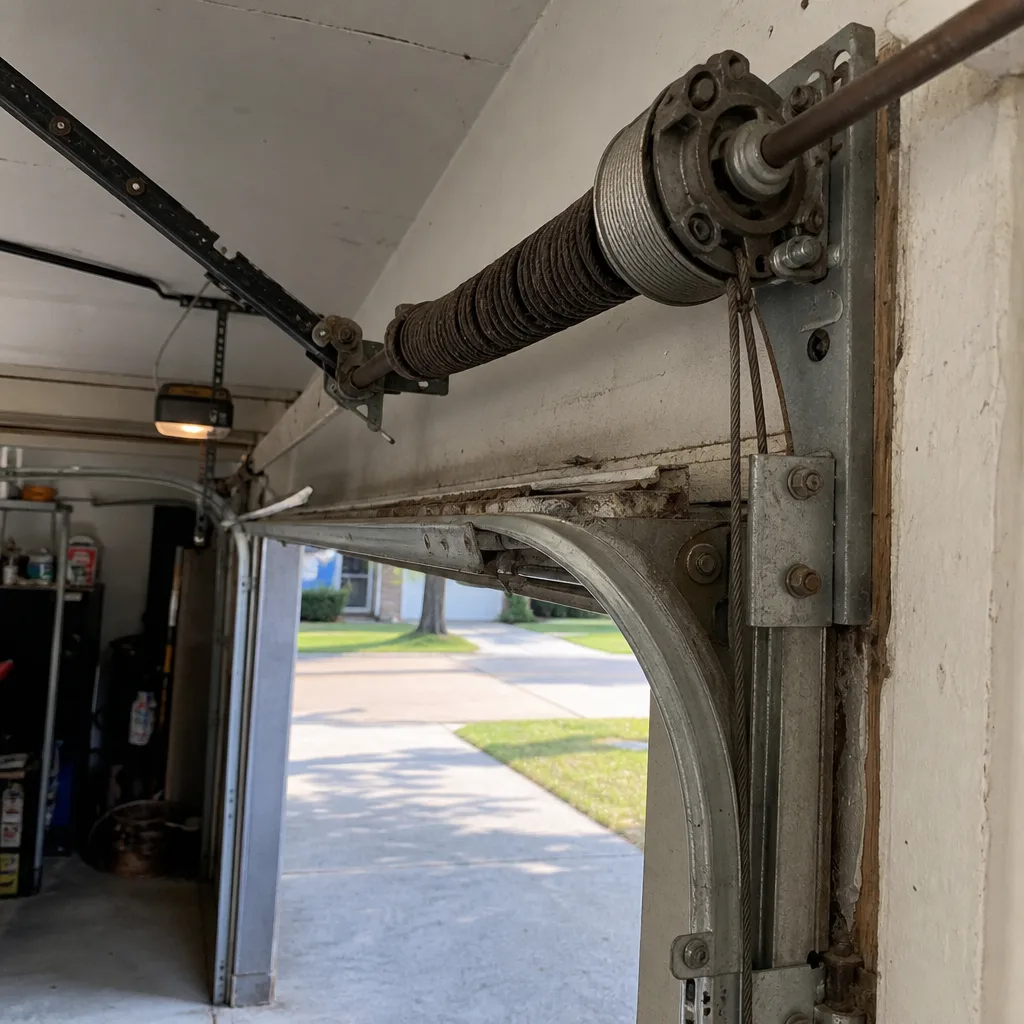 Before
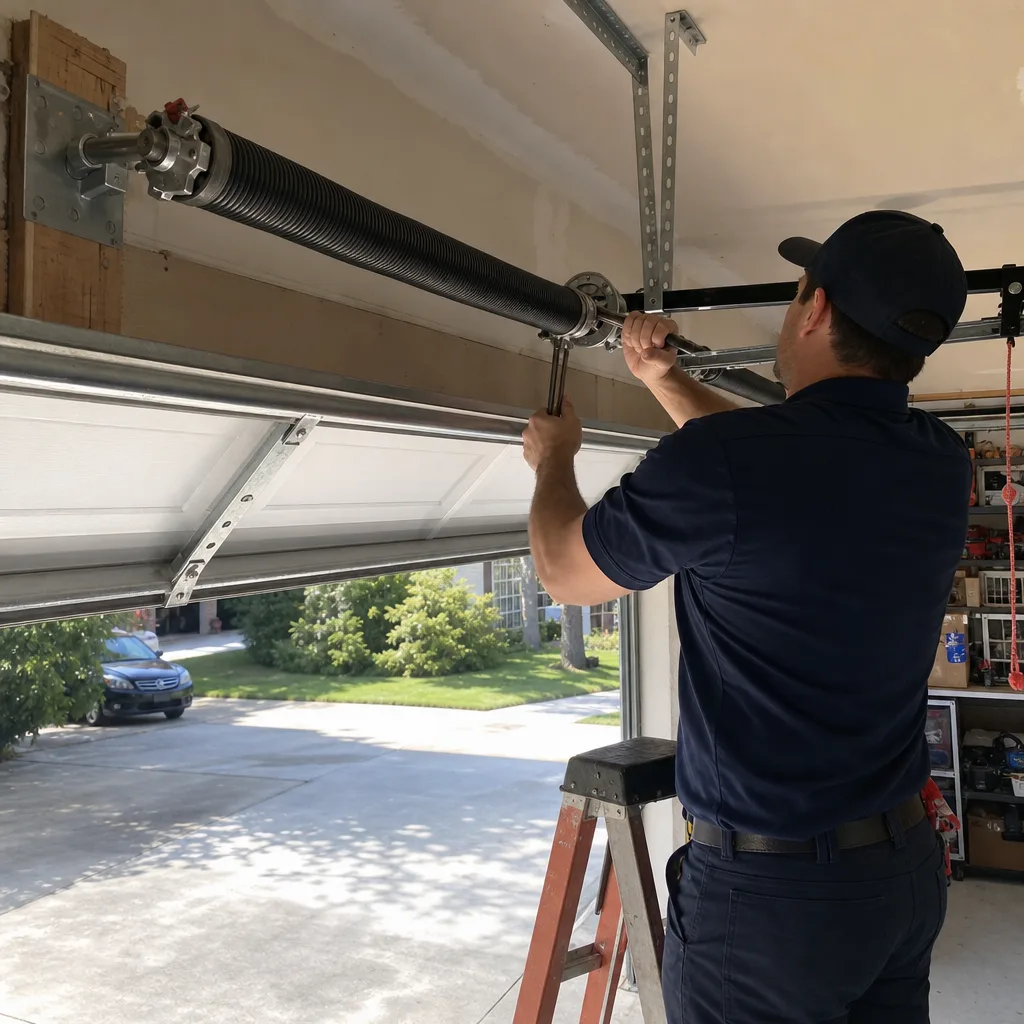 After
AfterGarage Door Warning Signs: A Jersey Village Homeowner’s Reference Guide
The single most common thing Otto hears on a repair call is “it was making a noise for a while but I figured it was fine.” That noise, specifically a grinding sound during the first foot of travel, is a bearing going out, and it almost always takes the spring with it when it goes. Garage doors telegraph failure for weeks before they actually break, but the warning signs are easy to dismiss as quirks. In Jersey Village, our humidity and clay soil accelerate the timeline between “quirky” and “broken at 7 a.m. when you need to leave for work.” This guide walks you through every sound, sight, and behavior that tells you a door is failing, what each one means mechanically, and when it’s a watch-and-wait versus a call-right-now. For a broader overview, see The Complete Guide to Garage Door in Jersey Village.
Quick Answer
The most common garage door warning signs in Jersey Village are a grinding noise during the first foot of travel (a failing bearing), a door that hesitates or moves unevenly (spring tension loss), visible gaps in a torsion spring (breakage within days to weeks), and a door that looks crooked while moving (a cable problem about to fail completely). Any of these means the door needs attention before it locks your car in the garage or drops unexpectedly. If you hear grinding, popping, or see a spring gap, stop using the door and call a professional same day.
Table of Contents
- Sound-by-Sound: What Each Garage Door Noise Means
- Slow or Hesitating Door: Why It’s Usually Not the Opener
- Visual Spring Warning Signs You Can See from the Floor
- A Crooked Door Is a Cable Problem, Not a Cosmetic One
- How Jersey Village Humidity and Soil Accelerate Door Failure
- Opener Warning Signs That Get Mistaken for Door Problems
- Roller and Track Warning Signs Most Guides Skip
- Common Mistakes to Avoid
- When to Call a Professional
- Frequently Asked Questions
Sound-by-Sound: What Each Garage Door Noise Means
A garage door should make a steady hum from the opener and a soft rumble from the rollers. Anything beyond that is the door telling you something specific. We have stood in hundreds of Jersey Village garages listening to doors, and each sound maps to a particular mechanical problem. Here is the breakdown:
- Grinding during the first foot of travel: A bearing is failing. This is usually in the torsion tube, end bearing plates, or a roller. It sounds like metal dragging on metal, and it gets louder the longer it’s ignored. The problem: when a bearing seizes, it transfers load to the spring, and a spring under uneven stress snaps sooner. We have replaced more springs that died this way than from natural wear.
- Squealing or high-pitched screech: This is metal-on-metal contact in the rollers, hinges, or bearing plates. In Jersey Village humidity, rust accelerates this. One squeaky roller is a $20 fix. Five squeaky rollers that have been ignored for a year can warp the track, and now you’re into the hundreds.
- Popping or snapping sound when the door moves: This is almost always a spring or cable strand letting go. If you hear a single loud pop while the door is moving, a strand in a cable has snapped. If you hear a continuous popping as it moves, a spring is binding and releasing, and it is days to weeks from complete failure. Stop using the door.
- Rattling: Loose bolts, loose hinge brackets, or loose track hardware. In Jersey Village, the expansion and contraction from our heat and rain cycles works hardware loose faster than in drier climates. A rattling door that gets ignored becomes a door that comes off its track.
- Thumping or banging at the top or bottom of travel: The opener limits are set wrong, or the travel bolts are loose. Every thump is the opener ramming the door against its physical stops. The opener has a force sensor, but repeated slamming wears it out years early.
The takeaway: a loud garage door is not “just how old doors sound.” Every noise names a part. Ignore the sound and the bill grows.
Slow or Hesitating Door: Why It’s Usually Not the Opener
When a door hesitates on the way up, moves slower than it used to, or stalls halfway, the homeowner instinct is to blame the opener. Here is what we’ve learned in twenty years of garage door repair in Jersey Village: if the opener is straining, the problem is almost never the opener. The opener is a motor with a chain or belt. Its job is to move the door. If the door is heavy, unbalanced, or binding, the opener has to work harder, which looks like a failing opener.
The real cause is usually one of these:
- Spring tension loss. Torsion springs are rated for a certain number of cycles, typically 10,000. As they approach the end of their life, they lose tension. The door gets heavier to the opener because the spring can no longer counterbalance the door’s weight. A door that used to open in ten seconds now takes fourteen. That’s not the opener. That’s a spring that’s done.
- Track binding. A roller that’s seized, a track with a kink or dent, or a bracket that’s pulled away from the jamb all create friction. Friction makes the door slow.
- Cold or humidity stiffened grease. In Jersey Village, our humidity means grease attracts moisture and dust, turning into a sticky paste inside hinges and roller stems. The door moves through it like you’d walk through mud.
- Opener gear wear. This is the rare case where it IS the opener. Stripped nylon gears inside the opener housing happen, especially on units over ten years old. But we check the door first, because a bad door kills a good opener fast.
Why this matters for what you spend: if you replace the opener and the spring is weak, the new opener works twice as hard and fails in a few years. If you fix the spring, the old opener often keeps running fine. At Otto’s Garage Door home we always diagnose the whole system before quoting anything, because replacing the wrong part wastes your money.
Visual Spring Warning Signs You Can See from the Floor
You do not need a ladder. You do not need to touch anything. From the floor of your Jersey Village garage, there are three places to look on a torsion spring, and each gives you a clear read on how much life is left.
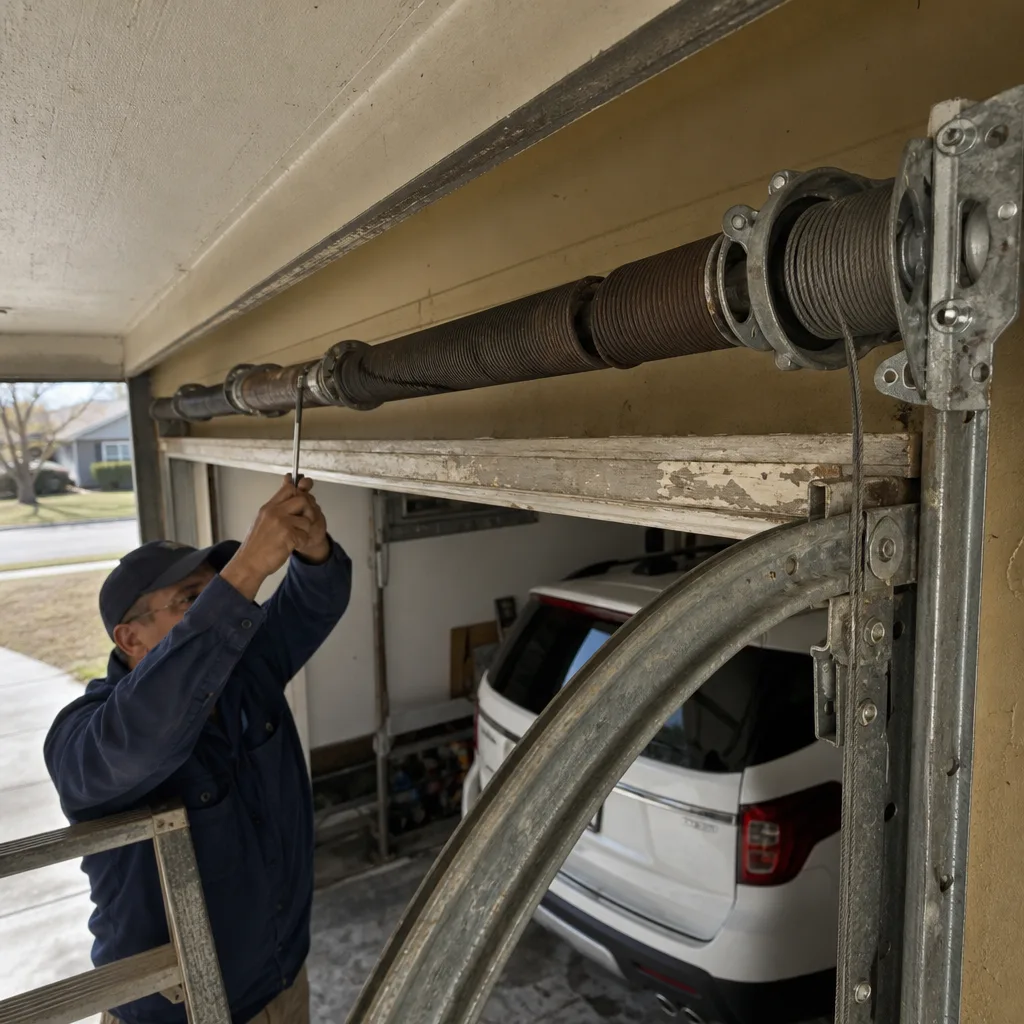
A torsion spring is the large coiled spring mounted horizontally on a metal tube above the door opening, centered above the door. Look for:
- Gaps or separation between coils. A healthy spring has coils touching each other in a smooth helix. When sections of coils separate so you can see daylight between them, that segment of the spring has lost its tension. Once this happens, the remaining coils carry extra load, and complete failure usually follows within days to weeks. This is the single most reliable visual warning sign.
- Rust build-up on the spring. Light surface rust is cosmetic. Deep rust with flaking or pitting means the spring’s wire has lost structural integrity. In Jersey Village humidity, springs rust faster than the national average. A pitted spring can snap even if it’s years from its rated cycle limit.
- Spring looks different than it used to. One end stretched out wider than the other. One spring sits at an angle. The spring assembly looks like it’s sagging. If your spring doesn’t look right compared to what it looked like last year, it probably isn’t.
I count spring cycles the way you count tire miles. A standard 10,000-cycle spring on a door used four times daily lasts about seven years. If your spring is seven years old or older, and you see any of these signs, schedule a replacement before it schedules itself, which is always at the worst time. A spring under tension is dangerous if you don’t know what you’re doing, so look, don’t touch, and call someone who does this every day.
A Crooked Door Is a Cable Problem, Not a Cosmetic One
If your garage door looks slightly off-level when it’s halfway up, or one side rubs the track, that is not “just how the door sits.” That is a cable problem, and here is what’s happening: your garage door has two cables, one on each side, that run from the bottom brackets up to a drum on each end of the spring tube. These cables carry half the door’s weight each. When one cable stretches, frays, or slips, that side of the door drops slightly, and the door travels up crooked.
Why this matters:
- A door traveling crooked puts uneven load on the springs, which shortens spring life.
- The crooked travel causes the rollers to bind in the tracks, which can pop a roller out and bring the door off its track.
- A cable that’s fraying is one strand away from snapping. When a cable snaps, the door drops on that side immediately. If your car or a person is under it, that’s a serious accident.
- In Jersey Village, cables rust faster because of our humidity. What looks like a little rust on a cable is actually the cable losing strands from the inside out.
Here is the tell: stand inside your garage and look at the door halfway through its travel. If the gap between the door edge and the track is different on the left than it is on the right, a cable or spring is failing. Close the door, unplug the opener if you’re not using it until repaired, and get it checked. A door is 200 pounds riding on two springs and two cables. Respect it.
How Jersey Village Humidity and Soil Accelerate Door Failure
Every garage door brand builds its products for average American conditions. Jersey Village is not average. Our climate works against garage door components in specific ways that most online guides, written for generic audiences, never mention. See Seasonal Garage Door Care for Jersey Village: Year-Round Homeowner’s Guide for a climate-specific maintenance plan.
Here is what our humidity does:
- Rust on cables and bottom brackets: Our average humidity hovers around 75% most mornings. Steel cables and bottom brackets sit in that humidity every night. Surface rust appears fast, and once it penetrates the cable strands, the cable loses strength. We regularly see cables in Jersey Village garage door installations from eight years ago that look worse than twenty-year-old cables in West Texas.
- Spring pitting: Springs sit above the door, where warmer, moist air rises from the concrete slab below. That air attacks the spring’s surface, creating pitting that becomes a stress concentration, which is where springs snap.
- Track corrosion at the bottom two feet: The bottom of the tracks sit closest to the slab, and the slab holds moisture from our clay soil. That section of the track rusts first, the rollers bind there, and the door starts hesitating at exactly the point you’re most aware of it: the first foot of opening.
- Hardware loosening cycles: Our heat expands metal. Our rain and humidity contract and moisten it. Every season cycle works hinge bolts, track screws, and bracket fasteners a fraction of a turn looser. After five or six years of Jersey Village summers and shoulders, hardware that started tight is loose enough to rattle, and a rattling door works its own hardware looser.
The fix for humidity-driven failure is not to live in a different climate. It’s to replace corroded parts before they fail, use galvanized or stainless hardware when available, and have the door checked yearly. A visual check from the slab up takes a professional about fifteen minutes, and it catches every problem in this guide before the door drops or locks you out.
Opener Warning Signs That Get Mistaken for Door Problems
Some warning signs point to the opener itself, and it saves money to know which ones. A LiftMaster opener from 2010 behaves differently than a Chamberlain from 2004, but the failure patterns are similar across brands.
- The opener runs but the door doesn’t move: The opener’s gear or sprocket has failed, or the coupler between motor and rail has worn out. This is an opener repair, not a door repair. On a ten-plus-year-old opener, it’s often the sign that replacement is the better money.
- The door reverses right after touching the floor: The close force sensor or limit switch is misadjusted, or the safety sensors at the bottom need cleaning. This is an opener adjustment, not a door problem.
- The opener works some days and not others: Cold solder joints on the circuit board, or a failing capacitor. In Jersey Village’s humidity, circuit boards corrode faster, and a board that works on dry days but dies on humid mornings is a classic sign.
- Remote range is shrinking: The receiver or remote battery is fading, or something in the garage is interfering. LED bulbs, some wireless doorbells, and certain electronics in the garage can cut range by half. This is almost never the door.
- Chain or belt clinking while the motor runs but the door doesn’t travel: The drive gear that connects the motor to the chain or belt is stripped. It’s an opener repair, and on older units, a sign that a new garage door opener in Jersey Village is the smarter spend.
The rule of thumb is simple: if the door is making the noise, it’s a door problem. If the opener is making the noise and the door is moving normally, it’s an opener problem. If you’re not sure which one is making the noise, stand in the garage and listen. The sound will localize.
Roller and Track Warning Signs Most Guides Skip
Most homeowner guides focus on springs and cables and never mention the parts that actually connect the door to the track: the rollers, hinges, and track hardware. Those parts carry the load and guide the door, and they fail quietly, which makes them the sneakiest source of a door that breaks at the worst time.
- Worn rollers with flat spots. Steel rollers with bearings that have failed will develop a flat spot on the wheel from skidding instead of rolling. The door will jerk or pulse as it moves, and that jerk puts shock load on the springs and cables. In Jersey Village, the dust from our clay soil gets into roller bearings and accelerates wear. Nylon rollers with sealed bearings last longer in our humidity.
- Hinge screws pulling out of the door. The door’s stiles are thin steel or wood, and hinge screws strip over time. If a hinge is loose, the door flexes at that joint, the panel gets twisted, and eventually the hinge tears out. A door that’s loudest mid-travel is often a hinge problem, not a spring problem.
- Track screws backing out. Every track has lag screws into the jamb and bolts on the angle brackets. In our climate, the wood jamb swells and shrinks with humidity, working the screws loose. Listen for a rattle near the wall. Check for screws you can turn with your fingers, though that only tells you they’re loose; tightening them properly and checking alignment is a job for someone who does it daily.
- Bent or dented track section. A car bumper, a ladder, a kid’s bike hitting the track can dent it just enough to catch a roller. Right where it catches, the door speeds up or slows down, and the cable on that side takes a jerk every time. A small dent can guide a roller into a bind, pop it out, and put your door in a dangerous position.
At Garage Door Repair in Jersey Village, we replace rollers and hinges more often than any other part except springs and cables, because we look at them on every service visit. Most people wait until a roller breaks, which causes avoidable damage to the track the roller was running in.
Common Mistakes to Avoid
- Greasing the track. Homeowners see a slow door and spray WD-40 or white lithium grease into the track. The track is not meant to be greased. The rollers ride in the track, and greasing it attracts dust and clay fines, turning into a thick paste that makes the door slower and forces the rollers to work harder. Clean the track, don’t lubricate it.
- Ignoring a noise because the door still opens. The whole point of this guide is that doors don’t fail without warning; they fail after weeks of warning. Every grind, squeal, and pop you ignore adds cost to the eventual repair.
- Replacing the opener when the spring is weak. A weak spring makes the door heavy, which makes the opener work hard, which looks like a failing opener. Replacing the opener without replacing the spring is throwing money at the wrong part, and the new opener will fail early.
- Trying to replace a spring yourself. Torsion springs are under extreme tension. The rods, the winding, the mounting all carry the potential for serious injury. There is a reason spring replacement is the one repair where a professional will never give step-by-step DIY advice. Don’t touch a spring, and don’t try to reduce tension on one that’s still wound.
- Judging spring life by the door’s age. A door installed in 2010 doesn’t matter as much as how many cycles the spring has gone through. A family that parks two cars in the garage and has kids coming and going puts six to ten cycles a day on the spring, which is double or triple the national average, and the spring dies twice as fast.
- Letting the door stay crooked because it “still works.” Crooked travel means uneven load, which doubles the wear on everything. The door works right up until the moment it doesn’t, and when it doesn’t, it may drop one side onto whatever’s underneath.
When to Call a Professional
Call same day if you hear a grinding noise during travel, see coil separation on a spring, notice a door traveling crooked, or hear any popping sound while the door moves. These are not watch-and-wait signs. They mean a component is actively failing, and the failure mode of a garage door is sudden, heavy, and dangerous.
Call within the week if your door is slow, you hear squealing, hinges rattle, or the opener is inconsistent. These are less urgent but will not fix themselves, and delaying them usually means the problem compounds into a bigger repair. Otto’s Garage Door offers free estimates in Jersey Village, and we quote the job before we touch anything. Call (346) 489-6145 and a live person will answer, often Otto himself, who will quote your repair on that call and hold the number when he gets there.
Frequently Asked Questions
A standard torsion spring replacement on a single-car garage door in Jersey Village typically runs between $180 and $340, including the spring and labor, depending on spring size, cycle rating, and whether one or both springs are replaced. A double-car door with two springs usually runs $250 to $450. We always replace springs in pairs when one has failed, because the second spring is the same age and the same condition. Call (346) 489-6145 for an exact quote, which is free and holds at the door.
Yes. Most spring, cable, and roller repairs are done the same day, and we carry common springs, cables, rollers, and hinges on the truck for all major brands including LiftMaster, Chamberlain, Genie, Clopay, Amarr, Wayne Dalton, Craftsman, and Raynor. A live person answers the phone around the clock, quotes the repair before the visit, and holds that price at the door. If it’s an emergency where the door is stuck open or sealed shut, call (346) 489-6145 and we will come out right away.
Look at the spring from the floor. If you see gaps between coils, rust with flaking or pitting, or the spring sitting unevenly on the tube, it’s within days to weeks of breaking. If the door is getting slower or heavier, that’s also a sign of spring tension loss. If you hear a popping sound when the door moves, stop using it and call a professional. Any of these signs means replacement is near.
Grinding during travel is usually a failing bearing in the torsion tube, end bearing plates, or a roller. The bearing’s internal surfaces are wearing against each other, and over time it will seize, transferring extra load to the spring and causing it to snap early. A grinding noise is the most reliable early warning of a major repair, so don’t ignore it. In Jersey Village humidity, rust gets into bearings faster, so we see this regularly.
We carry the most common springs, cables, rollers, hinges, and opener parts on the truck for all major brands, which means most repairs are completed on the first visit with no waiting for parts to ship. If your door needs a custom spring or a part we don’t stock, we’ll quote it before ordering and install it as soon as it arrives, with the price agreed before any work starts. Call (346) 489-6145 and we will tell you what we have for your specific door.
No. We quote the job based on the phone call and our experience with your door’s age, brand, and symptoms, and we hold that number when we get there. If we find something else the door needs, we’ll tell you what it costs before doing anything. The price you agree to is the price you pay. That’s how Otto’s Garage Door has worked in Jersey Village since 2004.
The Bottom Line
A garage door in Jersey Village is not a set-it-and-forget-it appliance. It’s a system of springs, cables, rollers, and tracks that works hard in our humidity and heat, and it tells you when it’s in trouble. Grinding means a bearing is failing. Crooked travel means a cable is going. Gaps in a spring mean it’s close to snapping. The sooner you act on these warnings, the cheaper and safer the fix. And when you need a professional, call (346) 489-6145 for a free estimate. For more guides & resources, visit our blog. The name on the van is the name on the license, and the quote holds at the door.
Written by Otto Reinhardt, Owner at Otto’s Garage Door, serving Jersey Village since 2004.