
Last updated September 10, 2026
Full 25-point door and opener safety check with every visit - springs, cables, rollers, tracks, and your LiftMaster or Chamberlain opener included
You get a price before we start. It does not change when the truck arrives.
 Before
 After
After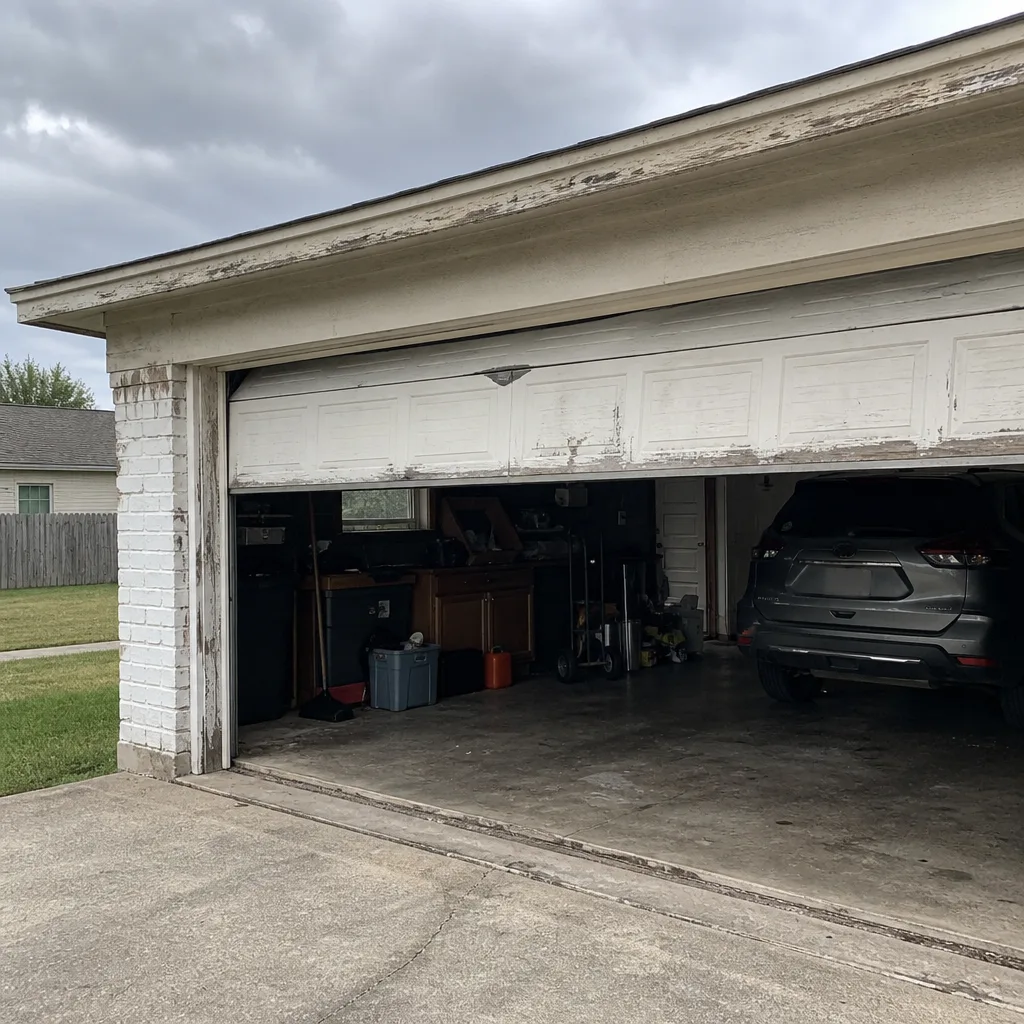 Before
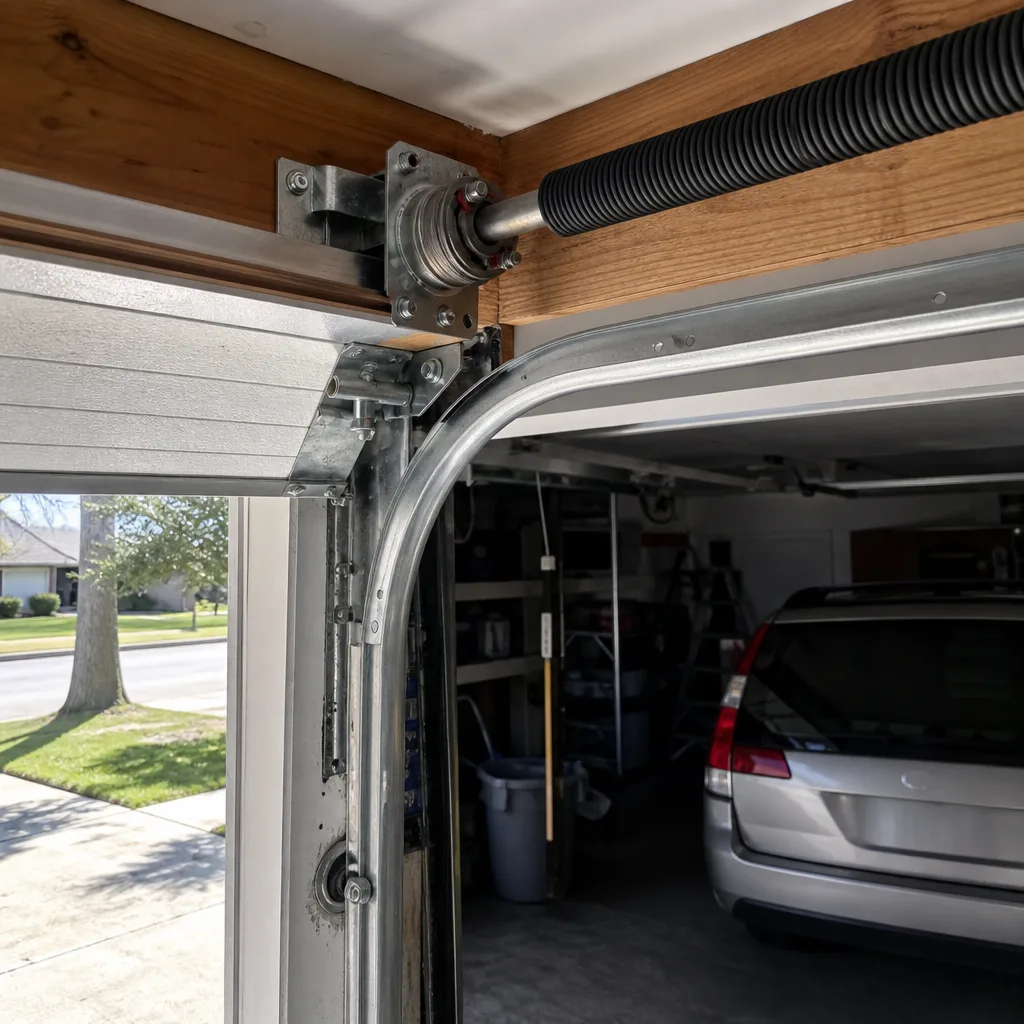 After
After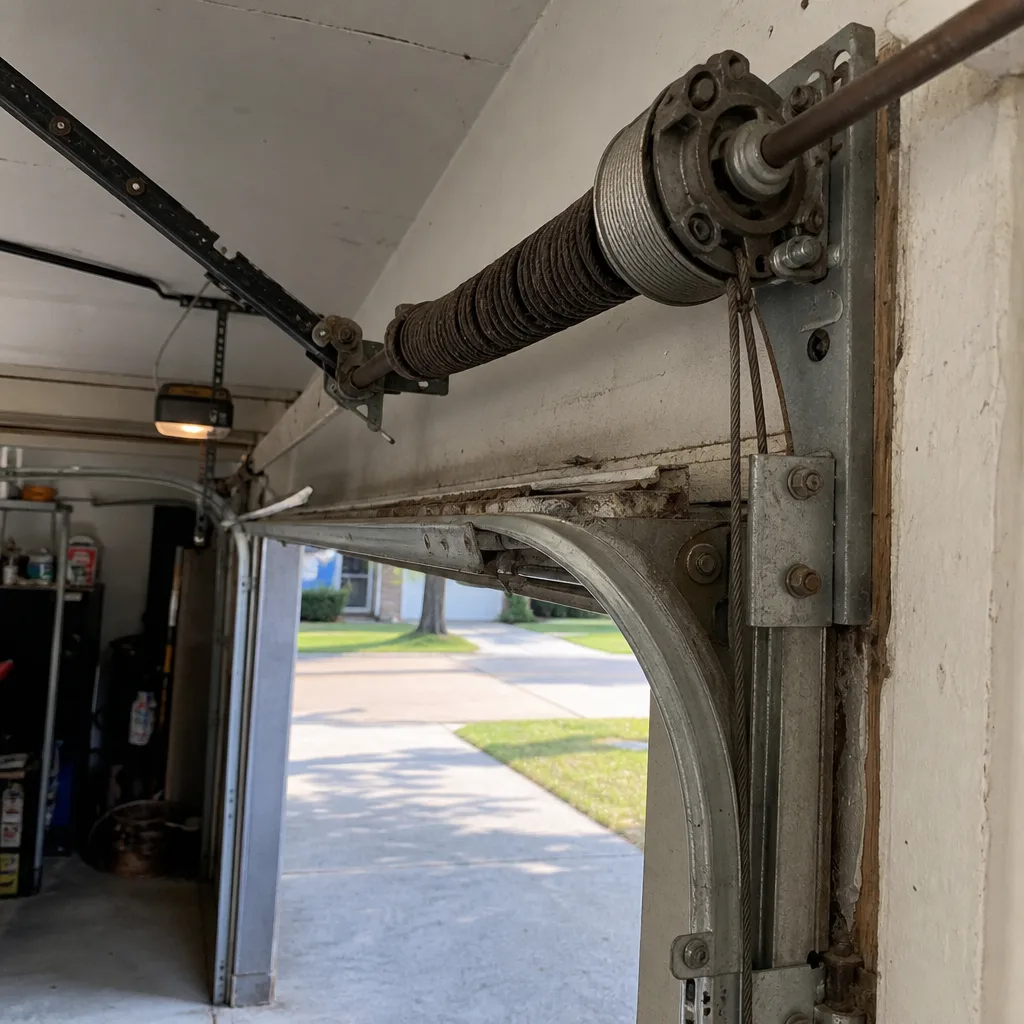 Before
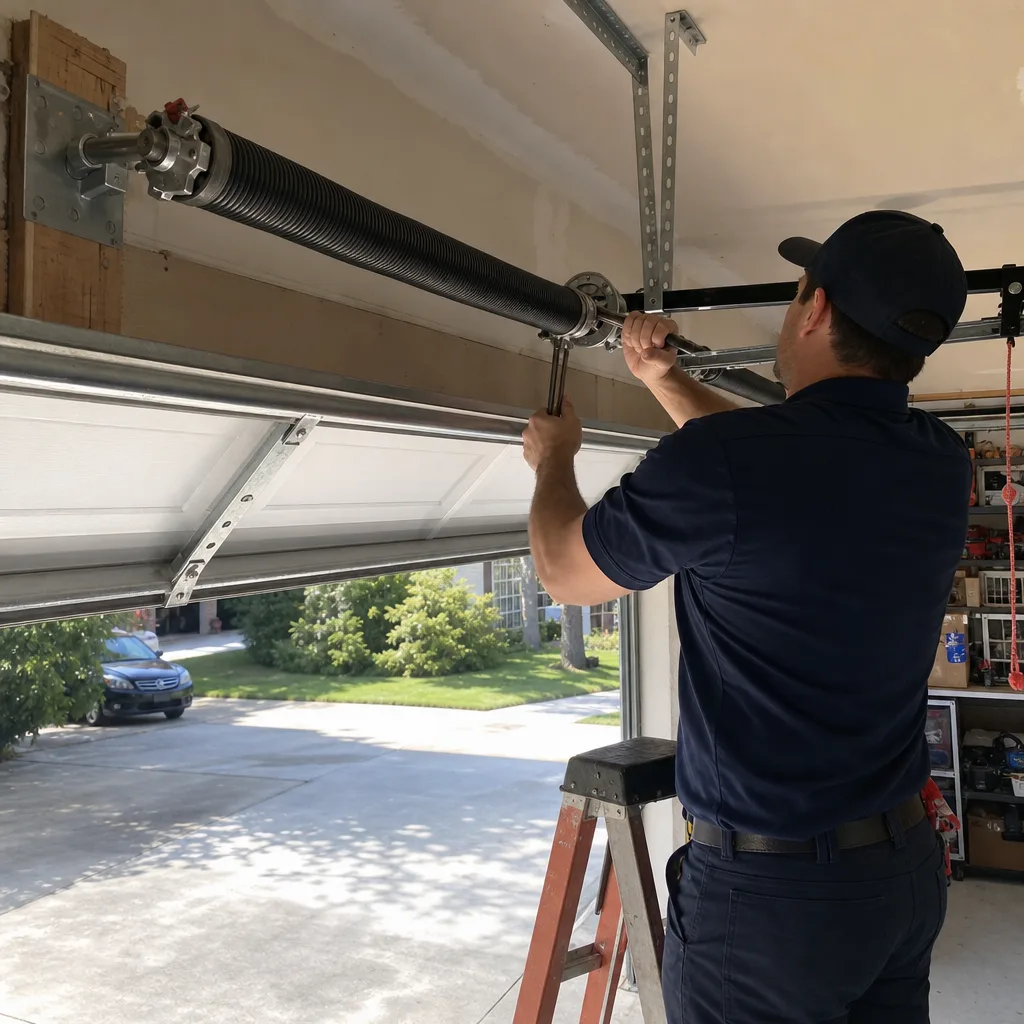 After
AfterSeasonal Garage Door Care for Jersey Village: Year-Round Homeowner’s Guide
Jersey Village doesn’t have four seasons. It has two: hot and humid, and one cold snap that catches everyone off guard. Then there’s the hurricane window that runs from June through November, which is its own animal entirely. Each of these phases damages garage doors in completely different ways, and if you only think about your door when it stops working, you’re already behind. This guide covers what actually fails, when it fails, and what to check before the weather forces the issue, and you can find more guides & resources on our blog. We’ve been fixing doors in Jersey Village since 2004, and we’ve seen every failure mode this climate can produce.
Quick Answer
Seasonal garage door maintenance in Jersey Village means checking the bottom seal after every heavy rain, lubricating moving parts twice a year, testing the safety reverse monthly, and inspecting springs each spring and fall. The two highest-risk windows are May (pre-hurricane season) and late November (the first real temperature drop). A homeowner can handle most of this in under 30 minutes, but spring inspection and any repair involving tension should always go to a licensed professional-something we break down further in DIY vs Professional Garage Door: The Jersey Village Homeowner’s Decision Guide.
Table of Contents
- Why Jersey Village Weather Is Harder on Garage Doors Than the Manufacturer Thinks
- The Spring Checklist: Pre-Hurricane Preparation That Actually Matters
- Summer Heat and Torsion Springs: The Cycle Count Nobody Warns You About
- Fall Prep: The Late-Fall Humidity Drop and What It Does to Wood Panels
- Freeze Events in Houston: Before, During, and After
- Bottom Seal Inspection: The Post-Rain Task That Prevents 90% of Callbacks
- A 15-Minute Monthly Maintenance Routine
- Common Mistakes to Avoid
- When to Call a Professional
- Frequently Asked Questions
Why Jersey Village Weather Is Harder on Garage Doors Than the Manufacturer Thinks
Spring manufacturers rate torsion springs by cycle count. A standard 10,000-cycle spring should last roughly 7 to 10 years under normal use. But “normal” in the specification sheets assumes a mild, dry climate. Jersey Village is neither. The combination of sustained 90 percent humidity, salt-laden air from the Gulf, and 100-degree afternoons creates a microclimate that accelerates spring fatigue in ways the manufacturer’s rating never accounts for.
We see it every summer. Torsion springs in Jersey Village lose tension measurably faster than identical springs in Dallas or Austin homes the same age. The reason is simple: steel under constant tension is more susceptible to micro-corrosion when humidity stays above 80 percent for weeks at a time. That corrosion creates tiny pits in the spring coil. Every cycle flexes those pits, and over time, they become the fracture point. The heat doesn’t help either. A garage with no insulation can hit 130 degrees inside during a July afternoon, and that heat transfers directly to the hardware.
The practical takeaway: don’t assume your springs have years left just because the math says so. A spring rated for 10,000 cycles in a dry climate might realistically deliver 7,000 to 8,000 in Jersey Village. If your door is coming up on its seventh year and you’ve never had the springs checked, schedule an inspection before hurricane season puts the door under additional load stress. For a full picture of what to budget, see our Garage Door Cost Breakdown: The Jersey Village Homeowner’s Reference for 2026. The math works, but the climate rewrites it.
If you need a spring inspection or a full tune-up, see our Garage Door Repair in Jersey Village page for what a standard service call covers and what it costs.
The Spring Checklist: Pre-Hurricane Preparation That Actually Matters
Most storm-prep advice for garage doors is generic: “make sure it closes.” That’s not wrong, but it misses what actually fails in high wind. A garage door is a 200-pound sail. When hurricane-force wind hits a closed door, the pressure flexes the panels, torques the track, and tests every hinge pin. What fails first is never the panel itself. It’s the fasteners, the track brackets, and the hinges that have been quietly loosening for years.
Here’s what to check in May, before the first storm forms in the Gulf:
- Inspect the track brackets. Every bracket that holds the vertical and horizontal track to the wall should be tight against the frame. Grab the track and pull side to side. If it moves, the lag bolts are backing out. Wood rot around the bolt holes is especially common in Jersey Village where humidity keeps framing lumber damp. If the bolt spins without tightening, the wood behind it is compromised and needs a longer bolt or a repair plate.
- Check hinge pins for wear. The hinges between door panels take the brunt of flex during high wind. Worn pins let the panels separate slightly under pressure, and that gap is where wind intrusion starts. Look for oval-shaped wear holes in the hinge leaf or a pin that has visible play. Hinges are cheap. A failed hinge during a hurricane is not.
- Verify the reinforcement strut. Single-car doors in older Jersey Village homes often lack a horizontal strut across the top panel. That strut is the difference between a door that flexes and holds and a top panel that folds inward under wind load. If you don’t have one, this is the year to add it.
- Test the emergency release. If the power goes out during a storm and you need to get a vehicle out, you’ll be standing in the dark pulling that red cord. If the release has never been used, it may be stiff or stuck. Pull it once during daylight so you know how it works and that it does work.
- Inspect weather stripping on all sides. Wind-driven rain in a hurricane comes sideways. The bottom seal matters most, but the side and top seals are what stop water from being pushed through the gaps. Run your hand along every edge with the door closed and look for daylight or felt movement.
For homeowners in neighborhoods like Country Gateway Estates or Villages of Cypress Creek, the older home stock means track hardware that has been in place since the 1990s in some cases. If you’ve never had the track and hardware inspected, a pre-season check by a professional is worth the cost. If you’re planning a full replacement before storm season, our Garage Door Installation in Jersey Village page covers what to expect and what a new door should include for storm resistance.
Summer Heat and Torsion Springs: The Cycle Count Nobody Warns You About
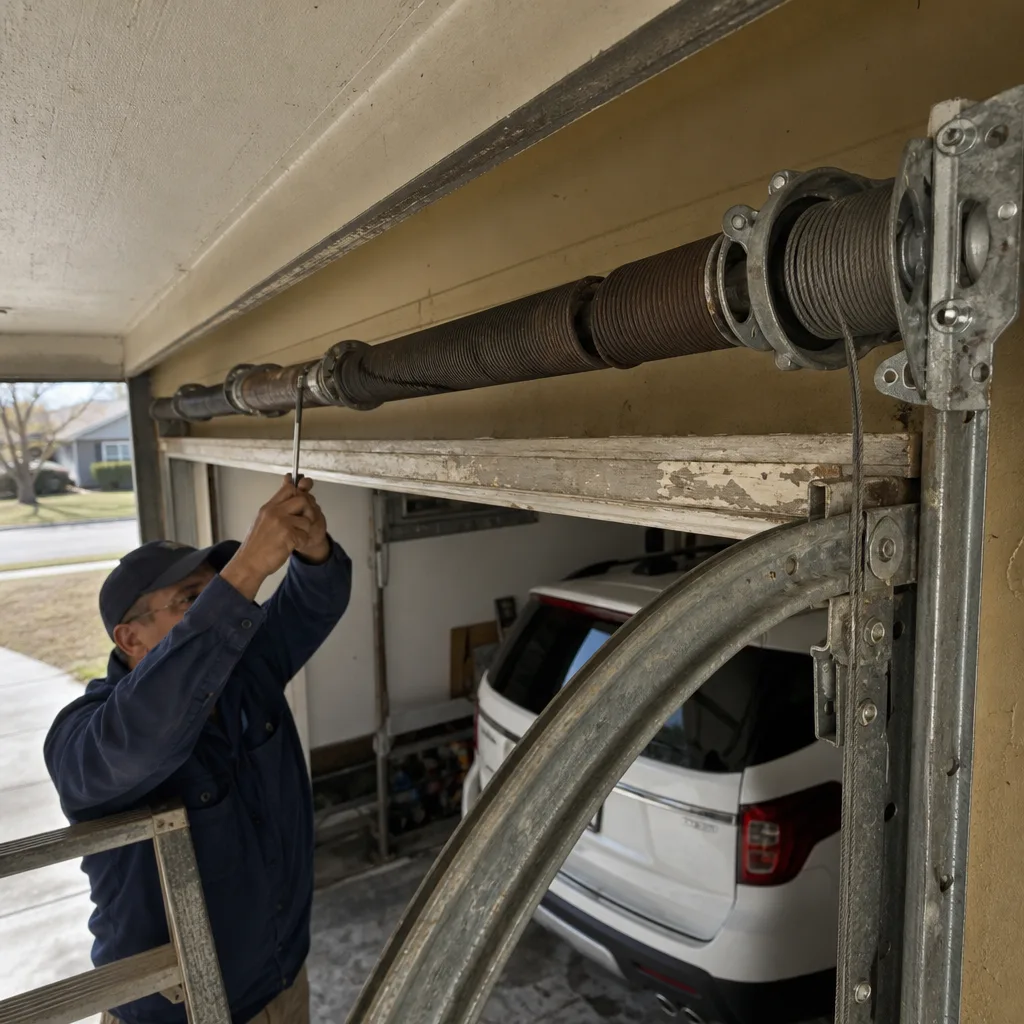
A torsion spring works by twisting. Every time your door opens or closes, that spring winds and unwinds, and each cycle adds a microscopic amount of metal fatigue. The manufacturer’s cycle rating assumes the spring operates within a normal temperature range. It doesn’t account for operational heat. But the heat doesn’t just come from outside air temperature. It comes from the spring itself.
Here’s what happens in a Jersey Village summer: the garage interior sits at 120-plus degrees all afternoon. The spring, mounted to a metal header plate against a hot wall, absorbs that heat. Then, when you open the door at 6:00 PM, the spring flexes while it’s hot. Hot steel fatigues faster. It doesn’t fail that day. It doesn’t fail that month. But across five or six consecutive Houston summers, that accumulated heat-loading shortens the effective life of your springs by 20 to 30 percent. That’s not speculation, it’s what we observe on the trucks when we replace springs that the math says should still have two years left.
There’s another factor we don’t hear discussed enough: garage door openers working harder in the heat. When the lubricant on the track and rollers thins out in high temperatures, the opener motor draws more current to move the door. That increased resistance puts more strain on the spring, not less. If your opener sounds like it’s laboring on a hot afternoon, the spring may already be losing tension. The opener is complaining first.
What can you do? Three things. First, keep moving parts lubricated with a silicone-based spray during summer months. Second, pay attention to how the door balances. Disconnect the opener and lift the door by hand. It should lift smoothly with one hand and stay in place at the halfway point. If it’s heavy, the spring is weakening. Third, if your door is seven or more years old and has never had a spring inspection, have one done. A spring that fails in summer heat is a loud, violent event, and it usually happens when the door is mid-travel. No one wants to be standing under it.
If you need preventive maintenance done right, Otto’s Garage Door has been doing exactly this in Jersey Village since 2004, and Otto himself will tell you what’s left on your springs the same way he’d tell you what’s left on a set of tires. If your opener is part of the problem, check our Garage Door Opener in Jersey Village page for what options make sense for this climate.
Fall Prep: The Late-Fall Humidity Drop and What It Does to Wood Panels
When the humidity finally breaks in Jersey Village, usually in late October or early November, it doesn’t just feel good. It changes the dimensions of your wood garage door. Wood absorbs moisture all summer, swelling slightly. When the air dries out, that moisture leaves the wood, and the panels contract. If the panels weren’t properly sealed in spring, that contraction is when the cracks appear.
We don’t see wood panel cracks forming in August. We see them in November and December, after the first week of genuinely dry air. By then, the damage has been done. The moisture left the wood too fast, and the panels found the path of least resistance, which is almost always at the joints or along the bottom edge where water wicked in during the wet months.
The fix is to seal wood doors twice a year: once in late spring before the heavy rain arrives, and once in early fall after the heat breaks but before the drying cycle sets in. Use a penetrating sealer, not a surface varnish. Varnish forms a film that traps moisture behind it, which is worse. A penetrating sealer lets the wood breathe while preventing rapid moisture exchange.
This isn’t about aesthetics. A cracked wood panel lets water into the door core, and that water starts the rot cycle that eventually requires a full door replacement. In Jersey Village, where summer humidity is a given, we recommend checking for hairline cracks every November. Catch them when they’re cosmetic and you can seal and stabilize. Wait until spring and you may be replacing panels.
For steel and fiberglass doors, the concern is different. Steel doors in this climate are vulnerable to rust at the panel edges and the bottom lip, especially if the factory finish has been scratched. A small rust spot expands rapidly in humid air. Sand it, hit it with rust-inhibiting primer, and touch up the paint. Do it before winter rain pushes the rust under the finish. Wayne Dalton and Clopay doors both have galvanized steel as an option, but even galvanized steel rusts at a scratch. It just takes longer.
Freeze Events in Houston: Before, During, and After
Winter Storm Uri in February 2021 froze garage door springs and cracked weather seals across Jersey Village in 48 hours. The doors that failed first were the ones whose owners had skipped the fall check because “it never really gets cold here.” It does get cold here. Not often, but when it does, the cold hits a door that has spent eleven months preparing for heat and humidity.
What actually happens to a garage door in a freeze:
- The weather seals lose their flexibility. Vinyl and rubber seals stiffen below 32 degrees. If the door opens while the seal is frozen against the concrete floor, the seal tears. Even without opening, the contraction can pull the seal loose from its retainer channel.
- Springs contract. A torsion spring under 90 degrees of ambient heat is one length. The same spring at 20 degrees is microscopically shorter and stiffer. That’s not a problem in itself, but if the spring was already near failure, the added stiffness can be the final nudge. We replaced more springs in the two weeks after Uri than in any other two-week stretch in our 20 years.
- Lubricant thickens. If you used a petroleum-based lubricant on the track and rollers, cold weather turns it to gel. The opener strains harder, the rollers drag, and the door moves sluggishly.
- The opener’s plastic gears become brittle. This is the one nobody thinks about. LiftMaster and Craftsman openers with plastic drive gears are more prone to gear stripping in cold weather. The plastic simply has less give at low temperatures.
What to do before a freeze: run the door through a full cycle, unplug the opener and operate it manually, and check that the emergency release works. Make sure the bottom seal isn’t already cracked. If it is, the freeze will finish the job. What to do during: open and close the door only when necessary. The fewer cycles in the cold, the better. What to do after: inspect the bottom seal and side seals for cracking. Run the door once and listen for any new noises, which could indicate a roller or hinge damaged by the cold snap.
Don’t pour hot water on a frozen garage door. The thermal shock can crack the paint on a steel door or split a vinyl seal. Let it thaw naturally or use a hair dryer on the weather seal only if you must get the door open. If the door won’t move at all, call a professional. Doors that are frozen to the ground will tear the bottom gasket when you force the opener, and that’s a cheap repair becoming an expensive one.
Bottom Seal Inspection: The Post-Rain Task That Prevents 90% of Callbacks
Here’s the single most common service call we get in Jersey Village after a heavy rain: water on the garage floor, pooling near the door. In nearly every case, the cause is a bottom seal that has been compromised for months. The owner didn’t know because they’d never thought to look.
The bottom seal is a rubber or vinyl strip that runs the entire width of the door and compresses against the concrete when the door closes. It’s designed to keep water, debris, and critters out. But concrete settles. Over time, the slab develops slight dips or a crown, and the seal, which is straight, no longer conforms to the surface. Gaps form. Water follows the gaps.
In Jersey Village, where a single afternoon thunderstorm can drop two inches of rain, a quarter-inch gap at the bottom seal is enough to leave a puddle. And because the water sits, it eventually damages the bottom panel, wicks into the door interior, and accelerates rust.
The rule we give every homeowner: check the bottom seal after every significant rain event. Not seasonally. Every time it rains hard enough to make you think about the drainage in your yard. The check takes ten seconds. Close the door from the outside and look for daylight under the seal. Run your hand along the seal to feel for gaps, cracks, or spots where it has flattened and lost its spring. On the inside, look for damp spots on the concrete near the door line.
Replacing a bottom seal is not a high-skill job, but it helps to know which profile your door takes. Older Raynor doors use a T-style retainer. Some Wayne Dalton doors use a bead style. The wrong seal won’t seat correctly, and a seal that doesn’t seat is as bad as no seal. If you’re not sure what you need, bring a piece of the old seal to a local supplier, or call someone who’s seen every profile this market has produced. We stock the common profiles on the truck, which means the repair is usually done on one visit.
A 15-Minute Monthly Maintenance Routine
Most of what keeps a garage door alive in Jersey Village is boring, repetitive attention. It’s not complicated. It’s consistency. Here’s the routine we recommend, and it’s the same one we walk through with every new homeowner we meet:
- Watch and listen. Open and close the door once, standing inside, and just listen. Smooth and quiet is good. Any grinding, scraping, squealing, or thumping is a signal. The door is telling you something. Don’t ignore it and hope it goes away.
- Check the balance. Pull the red emergency release and lift the door by hand. It should open smoothly and stay at the halfway point without you holding it. If it falls, the springs are tired. If it’s heavy, the springs are losing tension. This is the single most informative test you can do, and it takes 30 seconds.
- Test the auto-reverse. This is a safety feature, not a convenience. Place a 2×4 flat on the floor where the door closes, then close the door. It should reverse within two seconds of touching the board. If it doesn’t, the opener’s travel limits or force settings need adjustment. Every garage door opener sold since 1993 has this feature, and in our experience, half of the ones in older Jersey Village homes have never been tested since installation.
- Inspect the rollers and hinges. With the door closed, look at each roller. Nylon rollers should be smooth and round. Steel rollers should not have visible flat spots or rust pitting. Look at the hinge bolts for any looseness. A loose hinge accelerates track wear quickly.
- Lubricate the moving parts. Use a silicone-based spray, not WD-40. WD-40 is a solvent and degreaser, not a lubricant for this application. Hit the rollers, hinges, and the torsion spring. The spring needs a light coating along its length. Don’t overdo it; more lubricant means more accumulation of dust and debris.
- Check the photo eyes. The sensors near the bottom corners of the opening get knocked out of alignment by kids, bikes, lawn equipment, and the occasional garbage can. Both lights should be solid, not blinking. A blinking light usually means misalignment or something blocking the beam.
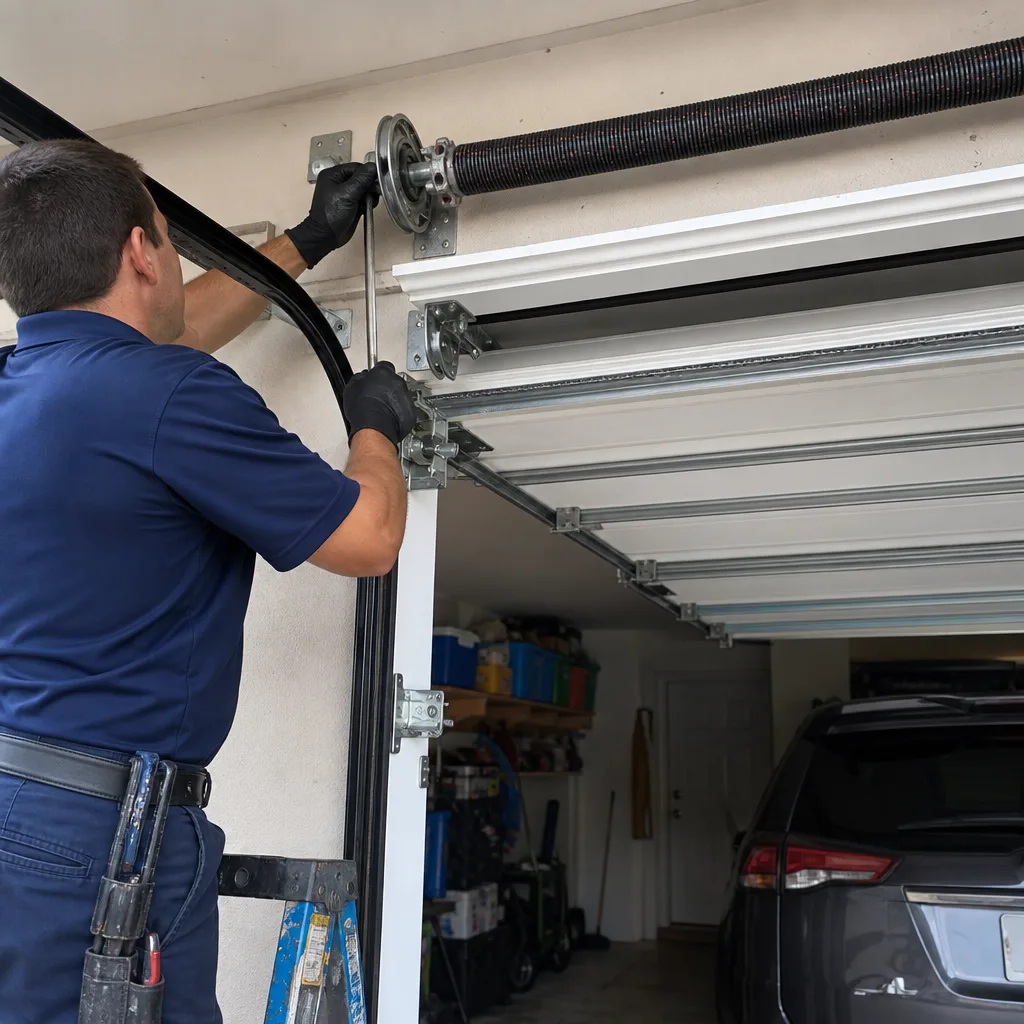
If any of these checks turns up a problem, address it. A torsion spring or a cable under tension is not something to repair yourself. These are components that store enough energy to cause serious injury. Call a professional who does this work every day. We are Otto’s Garage Door, we’ve been serving Jersey Village since 2004, and the name on the van is the same name on the license and the invoice.
Common Mistakes to Avoid
- Treating hurricane season like a once-a-year event. Jersey Village has a six-month hurricane window, not a “hurricane day.” The pre-season inspection in May is the baseline. But if a storm is in the Gulf in August, you should re-check the track brackets and door balance. High wind doesn’t care that you already did your spring maintenance.
- Using WD-40 on the rollers and hinges. It works for a week and then leaves everything dryer than before. Use a proper silicone-based garage door lubricant. This is the most common DIY mistake we see on service calls.
- Ignoring a noisy door. A garage door that makes noise on every cycle is telling you something specific. The noise is early-onset wear announcing itself. Fix the roller, the hinge, or the spring early and the repair is small. Wait until it fails and the repair is a full truck call.
- Forcing the door open after a freeze. If the door is frozen to the ground or the tracks, do not hit the opener button repeatedly. That’s how you strip a gear, tear a seal, or snap a spring. Thaw first, then operate.
- Replacing the opener when the spring is the problem. If the door is heavy or won’t stay up, the spring has failed. A new opener won’t fix that, and an opener working against a dead spring will burn out its own motor quickly. We see this a lot after freeze events, when homeowners assume the cold “killed the opener” and the real culprit is the spring.
- Putting off the bottom seal replacement. A torn seal is a cheap fix that prevents expensive damage. Every month it stays torn, water is getting into the bottom panel and the slab. In a climate that gets this much rain, this is the highest-ROI repair you can make.
When to Call a Professional
Some things on a garage door are homeowner-friendly. Lubrication, sensor alignment, seal inspection. Others are not. Torsion springs are under enough tension to cause serious injury or death if they release while you’re working on them. Cables that lift the door run through pulleys under the same load. If a spring or cable breaks while you’re in the path of the hardware, there’s no second chance. We’ve seen what these can do, which is why we’ll tell you straight: this is not where you save money by doing it yourself.
Call a professional when the door won’t balance, when a spring or cable is visibly damaged or broken, when the track is bent, when the opener is making grinding noises that aren’t solved by lubrication, or when you’ve been noticing increasing noise for weeks and can’t identify the source. Otto’s Garage Door offers free estimates in Jersey Village. Otto quotes the job on the phone and holds that number when he arrives. Call (346) 489-6145 and a live person answers, including at nine at night when a spring lets go and your car is sealed inside.
Frequently Asked Questions
Twice a year is the baseline: once in late April or early May before hurricane season, and once in late October or early November before the first cold snap. But the bottom seal should be checked after every heavy rain, which in Jersey Village means roughly once a month during the wet season. The safety auto-reverse test should happen monthly regardless of season. Call (346) 489-6145 if any check turns up a problem you can’t identify.
Most homeowners in Jersey Village pay between $75 and $150 for a professional tune-up that includes spring inspection, track alignment, lubrication, balance testing, and a full hardware check. If the technician finds a component that needs replacement, that’s quoted separately before any work begins. Otto’s quote is the same on the phone as it is at the door. Call (346) 489-6145 for an exact price on your door.
The bottom seal. It’s invisible, it’s boring, and it fails silently. But in our experience, a bad bottom seal is the root cause behind most water-in-the-garage complaints, and in a climate that gets this much rain, that water becomes rust, rot, and panel damage. Check it after every significant rain. It’s a ten-second inspection that prevents hundreds of dollars in eventual repair.
Yes, and it’s more important. Hurricane-rated doors are built to withstand higher wind loads, but that only works if the reinforcement struts, track brackets, and hinges are properly installed and maintained. A hurricane-rated door with loose track brackets is not hurricane-rated. The May checklist in this guide applies to every door in Jersey Village, and it’s doubly important on a door that’s supposed to hold up to a Category 2 or 3 storm.
No. Lubrication keeps moving parts quiet, but it doesn’t tell you anything about the condition of the spring. A spring can look fine and sound fine while it’s one cycle away from failing. The only way to assess a torsion spring is to check the balance, look for gaps in the coils, and listen for changes in operation. If you’re not sure what you’re looking at, call (346) 489-6145. Otto will tell you what’s left on your springs the same way he’d tell you what’s left on a set of tires.
Start with the balance test and the auto-reverse test in this guide. Those two checks take five minutes combined and will tell you more about your door’s condition than anything else. Then inspect the bottom seal and the track brackets. If everything checks out, schedule a professional inspection to catch what you can’t see. If anything doesn’t check out, call (346) 489-6145 and we’ll walk through it with you. We’ve been doing this in Jersey Village since 2004, and every job comes with the 90-Day Done Right Promise in writing.
The Bottom Line
Your garage door is the largest moving part on your home, and in Jersey Village, it’s working against a climate that punishes neglect, as covered in The Complete Guide to Garage Door in Jersey Village. The humidity eats springs. The heat fatigues metal. The hurricanes test every fastener. The rare freeze exposes every weak point. None of this is hard to manage if you stay ahead of it: inspect the seal after every rain, test the balance monthly, check the hardware before storm season, and call someone who knows this market when something seems off. Twenty minutes a month keeps a 200-pound door from becoming a garage wall decoration.
If your door needs attention, call (346) 489-6145 for a free estimate. Otto answers the phone, quotes the job, and shows up with the number he quoted. That’s how it’s worked in Jersey Village since 2004, and that’s how it’ll work when you call.
Written by Otto Reinhardt, Owner at Otto’s Garage Door, serving Jersey Village since 2004.